
Zeshan Khan didn’t set out to build another piece of optical technology. He set out to change how eye care is delivered — not at the product level, but at the level of the operating model itself.
As Founder and CEO of Xenon Ophthalmics, Zeshan has spent years studying the structural inefficiencies built into traditional eye care delivery: fixed infrastructure, fragmented workflows, and a cost model that grows every time demand does. His answer is the XO™ Vision Care System — an integrated platform that consolidates scheduling, diagnostics, frame fitting, and in-office finishing into a single connected workflow designed to expand clinical capacity without expanding physical footprint.
We sat down with Zeshan to talk about what he saw that others weren’t seeing, what it took to build the system, and where he believes the industry is headed.
When You First Looked At How Eye Care Was Being Delivered, What Did You See That Others Weren’t Seeing?
I saw an industry full of talented people working inside a system that had never really been redesigned. There were excellent doctors, advanced technology, and practices doing everything they could to serve patients well — yet the experience remained fragmented.
Scheduling was separate from diagnostics. Exams were separate from fitting. Fulfillment was happening downstream. Each part existed independently, and practices aimed to improve individual steps without changing how the entire system worked together.
At some point, it became clear to me that this was not just a technology challenge. It was an infrastructure challenge.
Xenon Has Spoken About Eye Care Having A System Design Problem, Not Just A Doctor Shortage Problem. When Did That Framing Click For You?
It happened gradually through conversations with practices and observing how care was actually being delivered day to day.
The industry often talks about access in terms of needing more providers, but even practices with strong teams were hitting operational limits. More patients created more pressure because the workflows themselves were still sequential, manual, and disconnected.
That was the moment the framing changed for me. The problem was not simply the number of doctors. It was the structure surrounding how doctors deliver care.
Most Companies In Optical Focus On Individual Products Or Technologies. Why Did Xenon Decide To Build Around The Entire Workflow Instead?
Because patients do not experience care as individual technologies. They experience it as a journey.
A patient does not separate scheduling from the exam, or the exam from eyewear fulfillment. They judge the experience as a whole. If one part feels disconnected, delayed, or inefficient, that shapes how the entire visit is perceived.
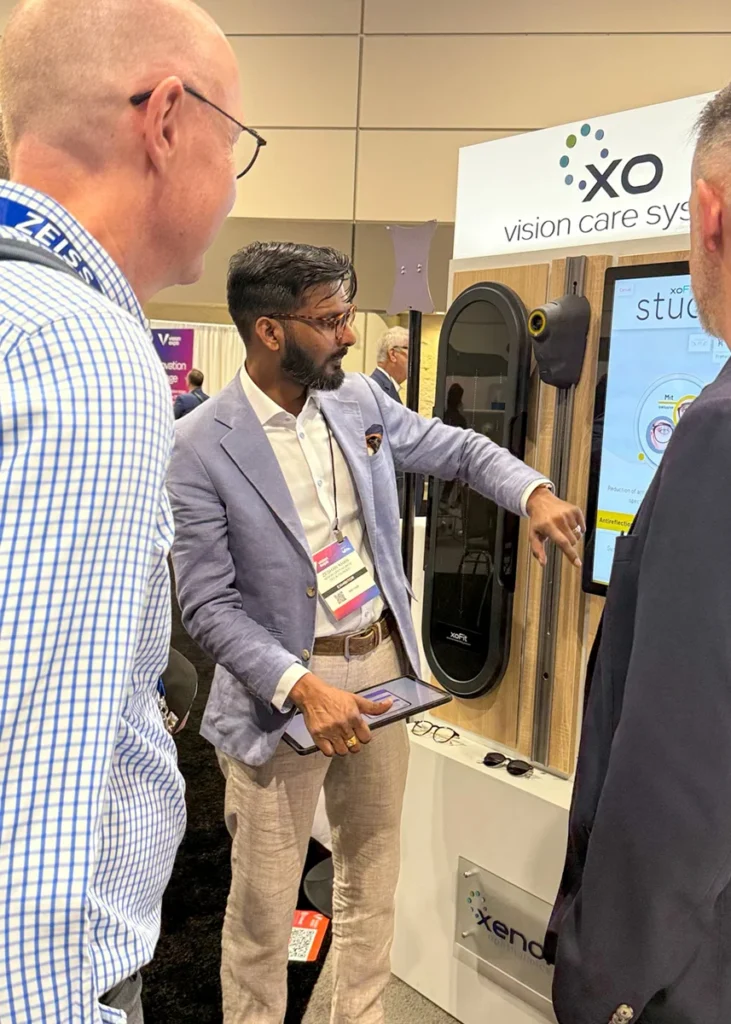
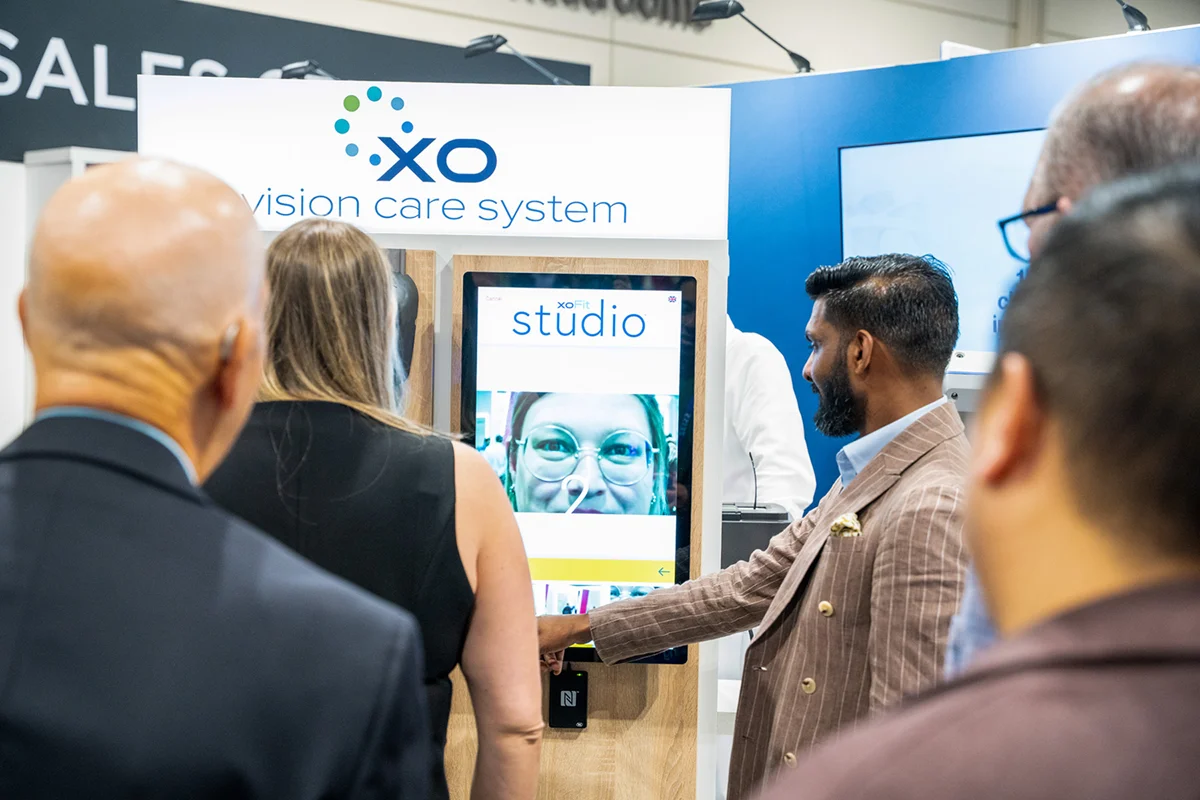
We believed the opportunity was not just to improve isolated steps, but to consolidate AI-assisted scheduling, diagnostics, fitting, and finishing into a single integrated workflow — one capable of reducing equipment footprint while improving patient throughput and operational efficiency. That became the foundation for the XO Vision Care System.
A Major Part Of Xenon’s Vision Involves Wearable Technology And AI-Assisted Workflows. How Do Those Technologies Fit Into The Future Of Eye Care?
We believe AI and wearable technologies will play a central role in expanding access to care and improving how practices operate.
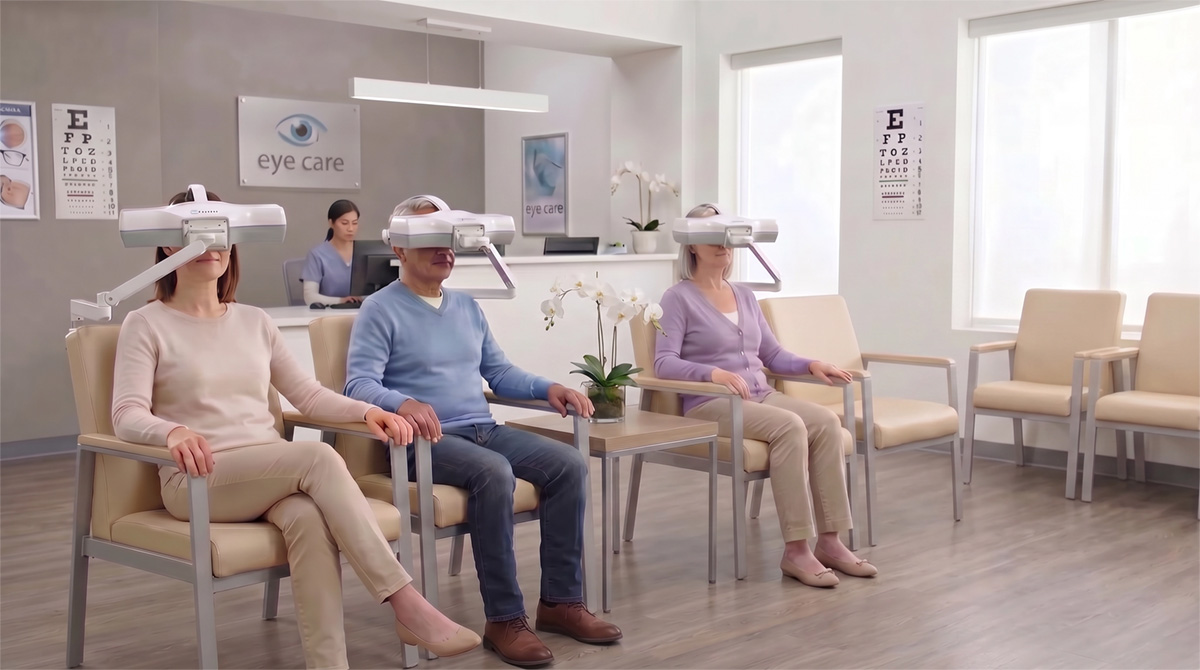
xoExam™ delivers 15+ automated diagnostic tests — including automated refraction, visual field testing, and advanced ocular diagnostics — in a single medical-grade wearable platform, without the capital cost or physical footprint of a traditional exam lane. That alone changes the economics of building or expanding a practice.
More broadly, the XO Vision Care System is designed to support AI-assisted diagnostics, wearable examination workflows, and flexible deployment across clinical, retail, and mobile environments.
The goal is not to digitize existing processes, but to create a model that allows care to be delivered more efficiently — with a smaller footprint, greater flexibility, and higher throughput per clinical day.
The XO Vision Care System Is Designed To Work In Clinics, Retail Environments, And Mobile Settings. Why Was That Flexibility Important?
Because access to care should not be limited by traditional infrastructure.
Traditional exam lanes require significant space, capital investment, and fixed deployment. That limits flexibility and creates real barriers in environments where space, staffing, or access are constrained — community health settings, retail locations, underserved markets.
We wanted to create a system that could adapt to how care needs to be delivered in the real world, not force providers into a single model. Portability and deployment flexibility are not features. They are part of the core design intent.
A Lot Of Your Recent Messaging Has Focused On Operating As One System. What Changes When A Practice Actually Achieves That?
The first thing that changes is predictability.
Patient flow becomes more consistent. Time lost between steps is reduced. The experience becomes more connected and easier to manage operationally.
But beyond that, the economics begin to change. Practices can operate more efficiently, reduce the amount of dedicated space required, increase throughput without simply adding more infrastructure, and scale capacity without expanding their physical footprint.
That is where operating as one system becomes more than a workflow discussion. It becomes a different business model.
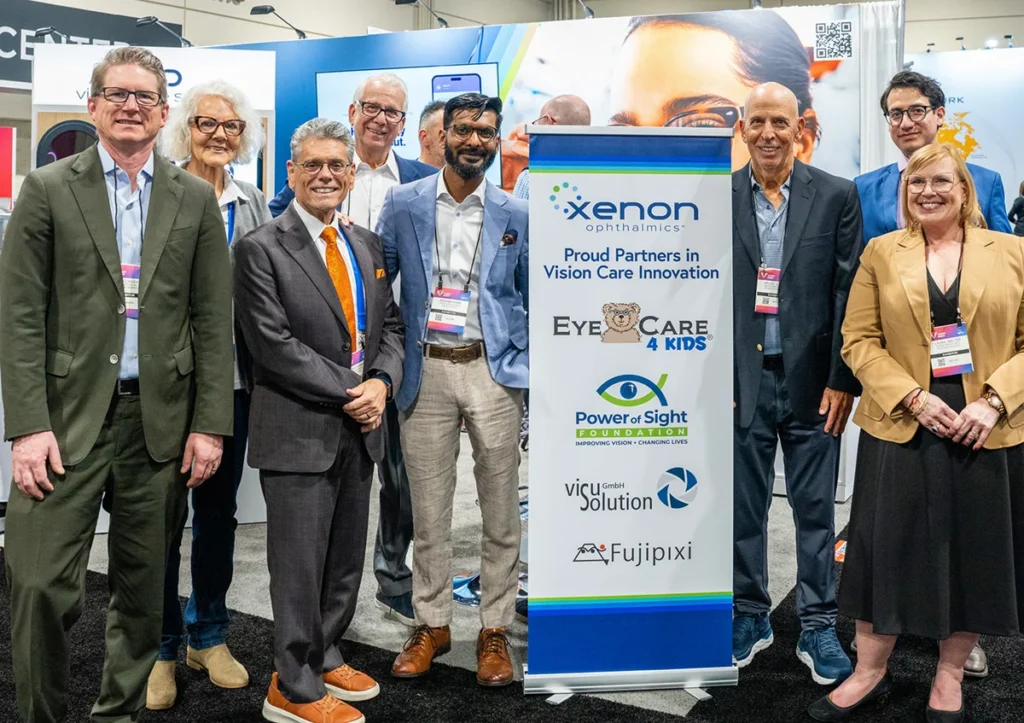
Xenon Recently Announced A Partnership With EyeCare4Kids. What Does That Relationship Represent To You Personally?
That partnership reflects something we care deeply about as a company: expanding access to care in a meaningful and scalable way.
Technology should remove barriers, not create them. If innovation only works in ideal environments or only benefits certain communities, then it is incomplete.
Working with EyeCare4Kids gives us an opportunity to help deliver comprehensive vision care to populations that are too often underserved, and that is incredibly important to us.
Where Do You Believe Eye Care Delivery Needs To Be In Ten Years?
I believe care will become far more connected, flexible, and efficient than it is today.
The traditional model — isolated systems, fixed infrastructure, fragmented handoffs — will continue to give way to integrated workflows that support higher throughput, lower capital requirements, AI-assisted diagnostics, and more portable deployment. Practices will need ways to deliver high-quality care while operating more efficiently and reaching more patients.
Xenon is currently working with partners, providers, and organizations focused on expanding access to modern vision care delivery across clinical, retail, and community-based environments. That is the future we are building toward.
About Xenon Ophthalmics
Xenon Ophthalmics develops integrated technologies designed to modernize the delivery of eye care. The company’s XO™ Vision Care System connects scheduling, diagnostics, frame fitting, and in-office finishing into a unified workflow designed to expand clinical capacity while improving the patient experience.
One system. From appointment to finished eyewear.
The XO Vision Care System brings together four integrated, intelligent components — xoIris™, xoExam™, xoFit™, and xoLab™ — creating a seamless patient journey while giving practices greater operational visibility and clinical control.
If your practice or organization is evaluating how to improve efficiency, reduce infrastructure requirements, and expand access to care, the next step is to see how the system works in practice.